*사용된 모든 영문 image의 출처는 cs231n 강의 자료입니다.*
<Bag-of-Words>
1. Word Embedding
2. Bag-of-Words representation
3. Naive Bayes Classifier
Word Embedding
< Vector가 가지는 의미 >
| Bag-of-Words 가정 | Language model | 분포 가정 | |
| 내용 | 어떤 word가 많이 쓰였는가 (빈도 수) | word가 어떤 순서로 쓰였는가 ex) 나는 학교에 (먹는다, 잔다, 간다) |
어떤 word가 같이 쓰였는가 ex) (학교, 공부) (자동차, 운전) |
| 대표 통계량 | TF-IDF | - | PMI |
| 대표 모델 | Deep Averaging Network | ELMo, GPT | Word2Vec |
Bag-of-Words 가정
- 저자의 의도가 word 사용 여부나 그 빈도에서 드러난다고 보는 가정
TF-IDF
- 어떤 word의 topic 예측 능력이 강할 수록 가중치 상승

- Deep Averaging Network: sentence에 속한 word의 embedding을 평균을 취해 Sentence Embedding 생성
→ 순서 고려 x, only 단어등장 유무만 판단
Language model
- word의 등장 순서를 train해 주어진 word sequence가 얼마나 자연스러운지 확률 부여 (DL model)
분포 가정
- word의 의미는 주변 문맥을 통해 유추해볼 수 있다고 보는 가정
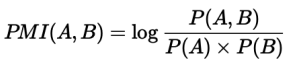
- PMI: 두 word(A, B)가 얼마나 자주 같이 등장하는지에 관한 정보 수치화
- Word2Vec: 특정 다긴 word 주변의 문맥, 즉 분포 정보 함축
Bag-of-Words representation
Bag-of-Words(BoW)
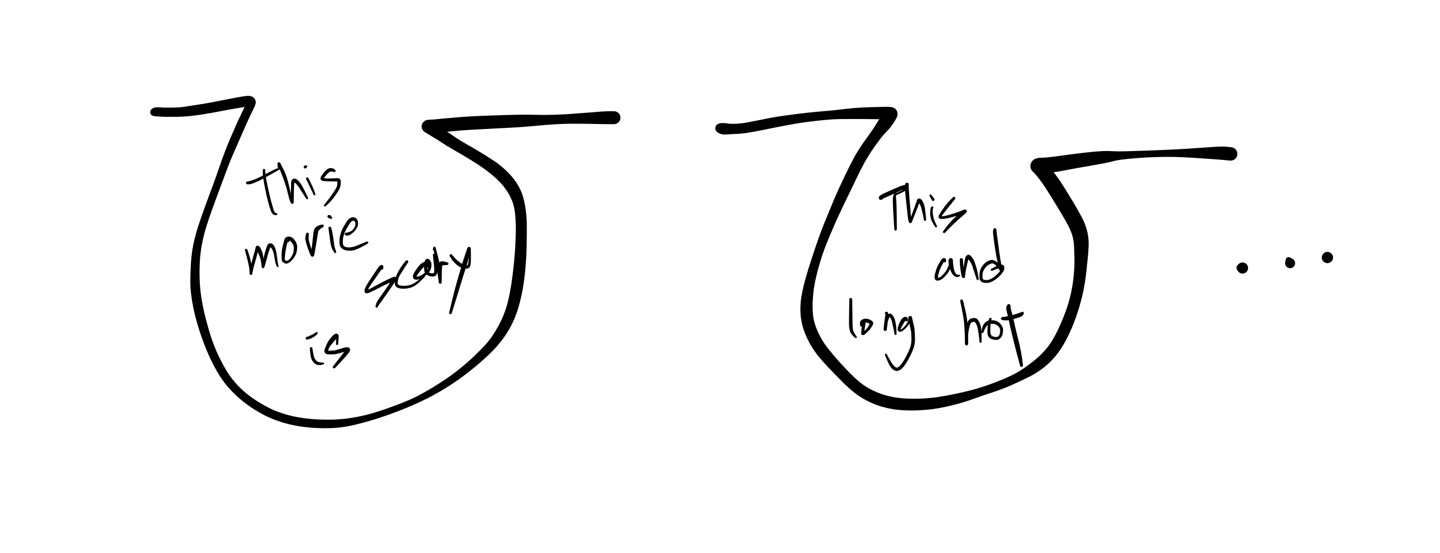
- text가 word의 bag으로써 표현
Modeling BoW
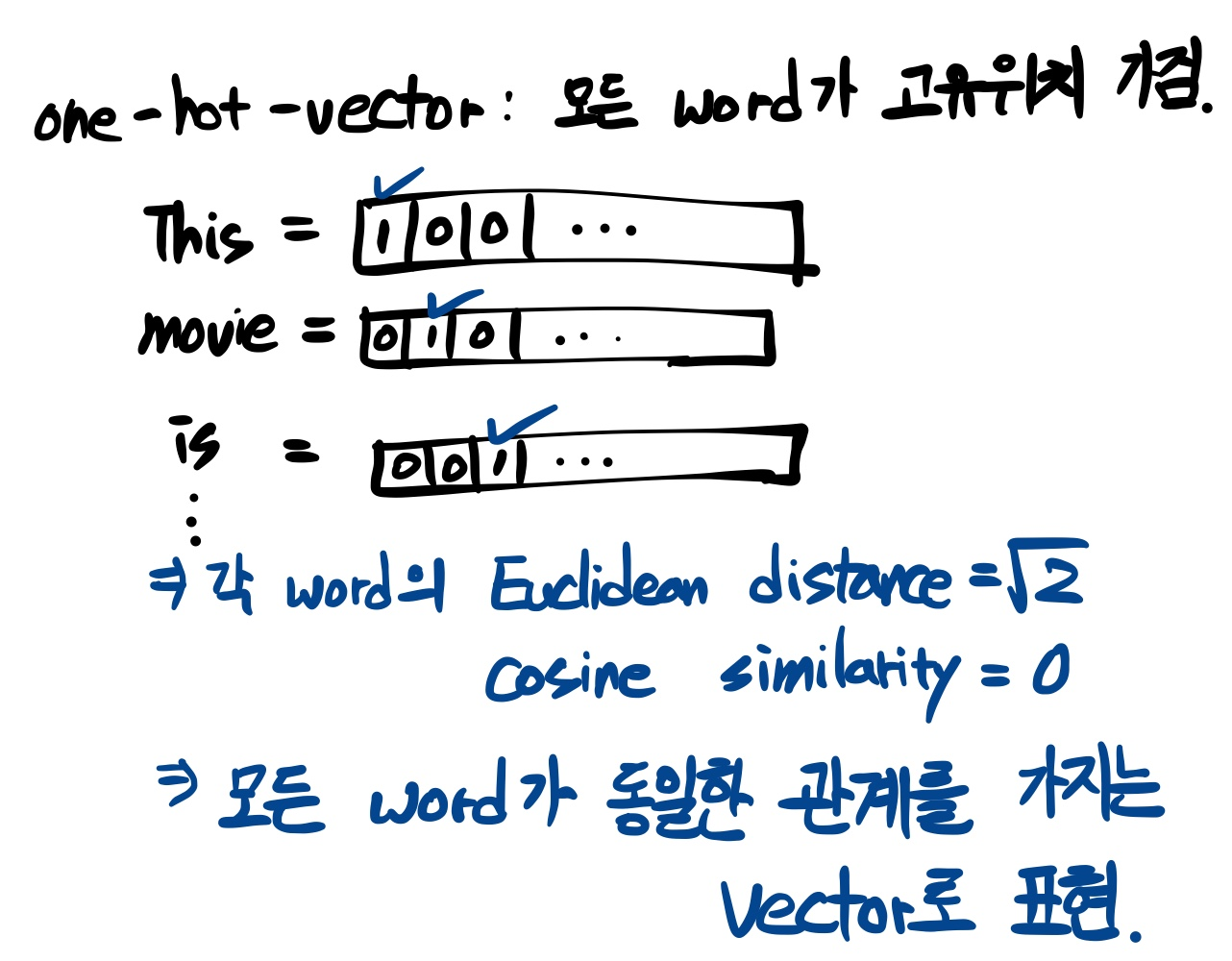
- Unique words들로 Vocabulary build
- 각 word를 one-hot-vector로 encode
- one-hot vector들의 합을 text data로 표현
TF-IDF

- Bag-of-Words 가정 기반
- 하나의 word가 전체 document중 얼마나 중요한가를 수치화
Word-document matrix A (W x D)라 하면,
- A[w(i), d(j)]: i번 째 word가 j번 째 document에서 등장 횟수
- TF(w): overall document에서 w의 등장 횟수
- DF(w): w가 등장하는 document의 횟수
ex)
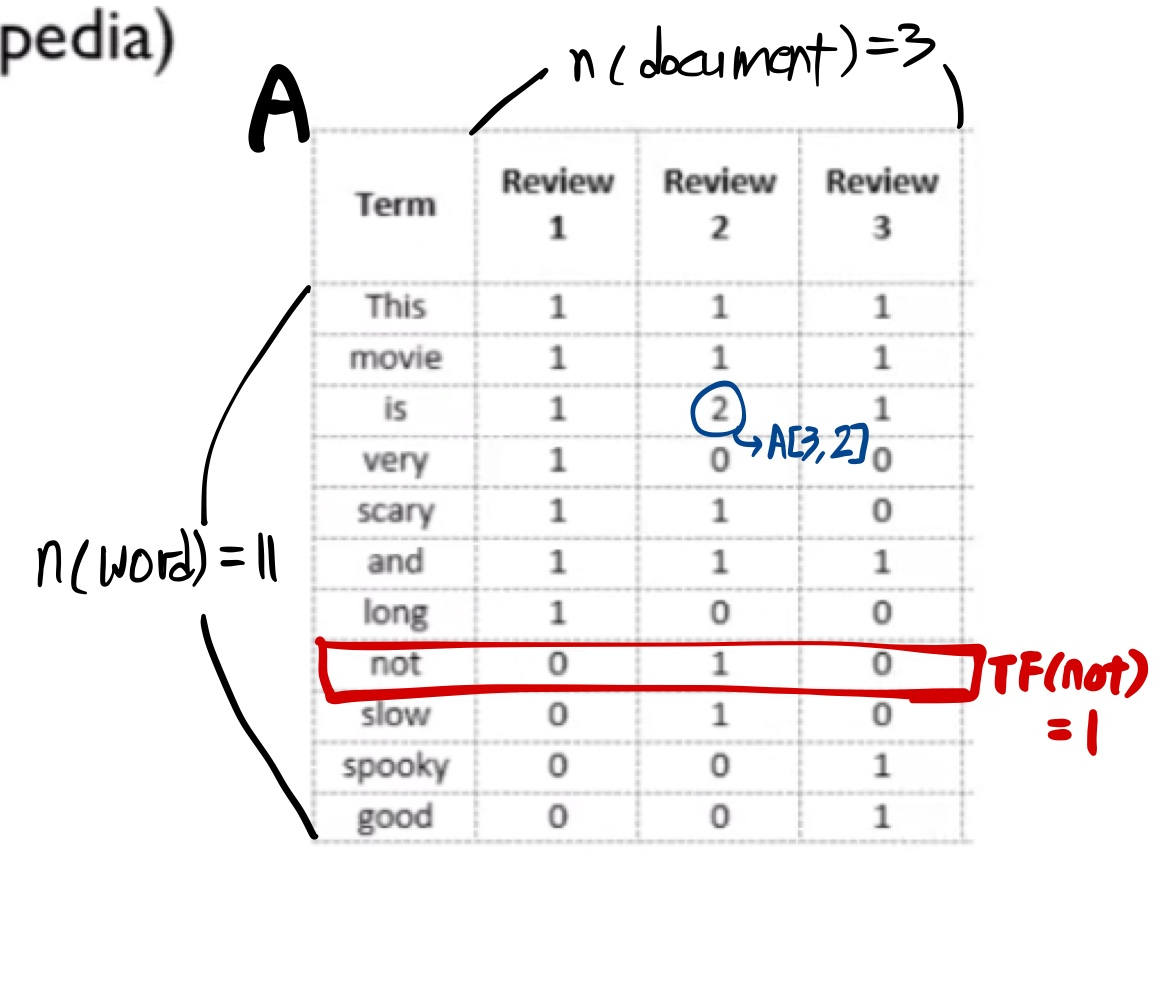
TF('is') = 3, TF('good') = 1
DF('is') = 3, DF('good') = 1
TF-IDF('is') = TF('is') x log(3/DF('is')) = 3 x log(3/3) = 0
TF-IDF('good') = 1 x log(3/1) = log 3
→ 'good'보다 'is'가 TF-IDF 값이 더 높기 때문에 document에서 더 중요한 정보를 가지고 있다.
Naive Bayes Classifier
Bayes` tehorem
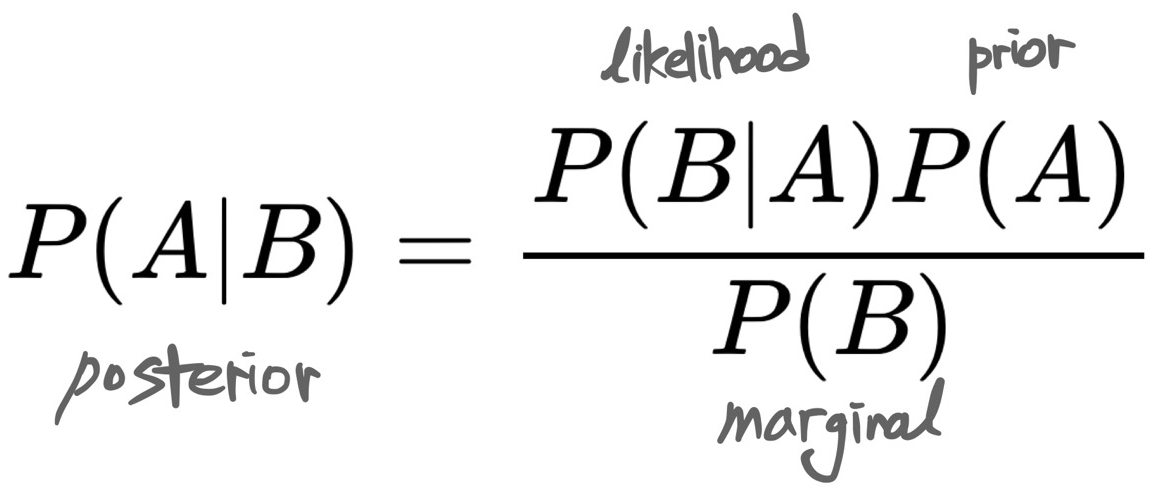
- 모든 feature는 independent하다고 가정
Naive Bayes Classifier
- Bayes` theorem을 적용한 simple probablistic classifier
- 모든 feature가 independent → 모든 words in sequence가 independent
- 각 document d에서 C classes가 부여된다고 가정
- P(c|d): probability that d belongs to c
- Bayes`theorem에서 denominator 제거 → P(c|d) = P(d|c)·P(c)
- d는 sequence of words w1, w2, ····, wn로 볼 수 있기 때문에,
→ P(d|c)·P(c) = P(w1, w2, ···, wn|c)·P(c)
Chain rule 적용:

ex) 새로운 sentence: 'you free loterry'가 spam인지 inbox인지 구분,
P(Cspam|sentence) = P(Cspam)·P(Wyou|Cspam)·P(Wfree)·P(Wlottery|Cspam) = 6/1000
P(Cinbox|sentence) = P(Cinbox)·P(Wyou|Cinbox)·P(Wfree|Cinbox)·P(Wlottery|Cinbox) = 0
→ sentence를 spam으로 분류
'NLP' 카테고리의 다른 글
| Word Embedding - Word2Vec, Glove, Doc2Vec (0) | 2022.06.20 |
|---|---|
| Topic Modeling (0) | 2022.06.17 |
| NLP overview (0) | 2022.06.16 |
| NLP 이해하기 (0) | 2022.04.07 |
| 구글 BERT의 정석 정리(수기) (0) | 2022.04.07 |


