<Training Neural Networks>
1. Activation functions
2. Batch Normalization
3. Optimization methods
4. Ensemble and regularization
Activaction functions
Sigmoid activation
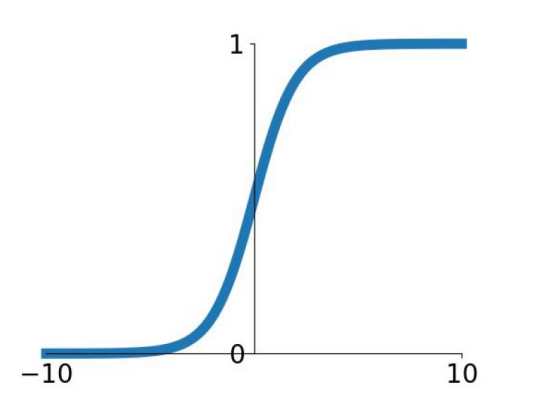
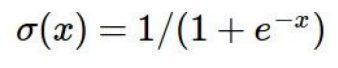
- range [0, 1]
- Saturated neuron에서 gradient 소실
- Sigmoid output들은 zero-centered가 아님
- exp() 연산 시, 연산량 ↑
Softmax function
- sigmoid의 multi label class 형태

Tanh activation
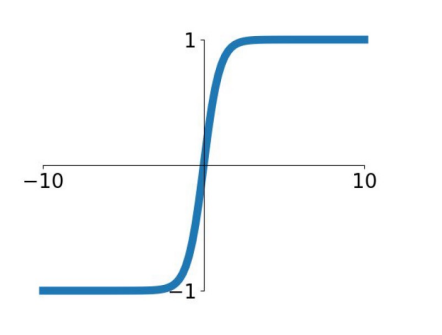
- Sigmoid * 2 - 1
- range [-1, 1]
- zero centered # RNN 같은 경우 zero-centered 문제가 중요함
- 여전히 saturated neuron에서 gradient 소실 문제 有
ReLU (Rectifier Linear Unit)
# 사실상 Deep Learning이 더욱 deep한 layer를 쌓을 수 있게 만든 장본인!
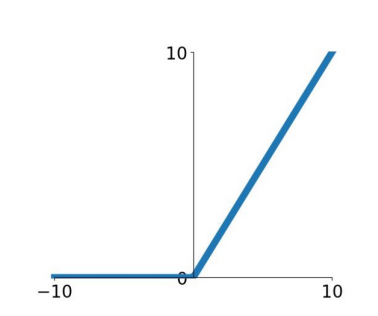
| Input | Output |
| x ≥ 0 | 0 |
| x < 0 | x |
- saturate neuron 기울기 소실 문제 해결
- 효과적 연산 가능
- sigmoid/tanh보다 연산 속도가 빠름
- Sparse activation: 0 이하의 input에 대해 output을 0으로 출력함으로써 부분적으로 활성화
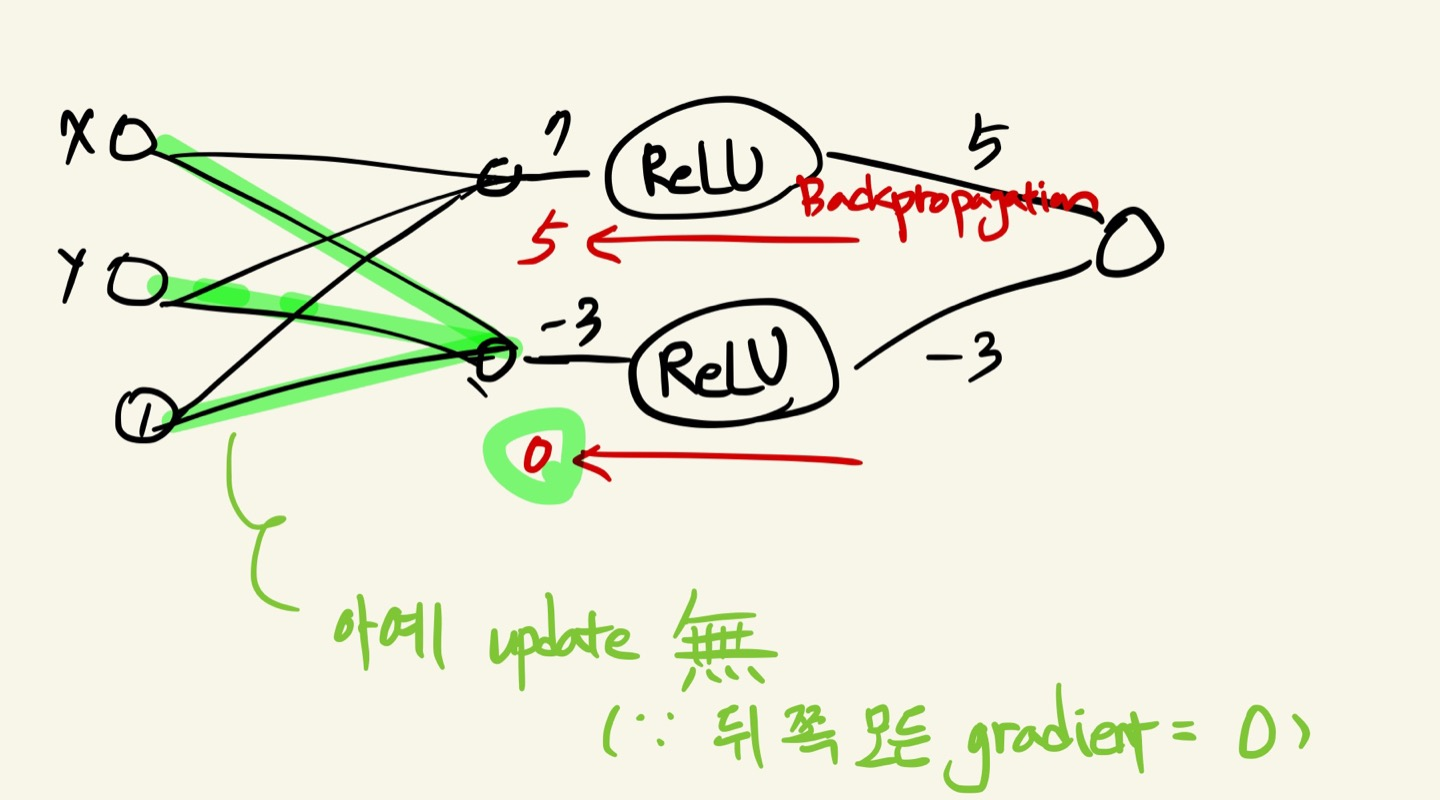
- Efficient gradient propagation:
gradient vanishing 및 gradient exploding이 없음 → 더 깊은 layer 쌓기 가능
- Efficient computation:
선형함수이므로 미분 계산이 간단하고 연산 속도 ↑
- Scale-invariant:
max(0, ax) = a*max(0, x)
- output이 zero-centered output이 아님
Batch Normalization
- Linear regression(-∞, ∞)의 range를 조정
- 보통 Fully Connected나 Convolution layer 후, nonlinearity 이전에 시행
- network의 gradient flow 향상
- 높은 learning rate 가능
- initialization의 강한 dependence 감소
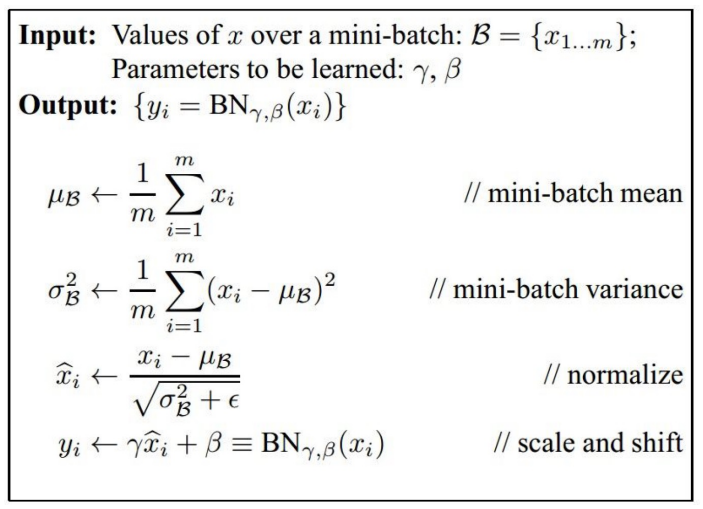

1. 각 dimension의 평균과 분산 계산
2. Normalize

3. scale
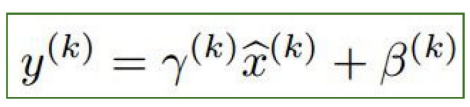
- 다시 선형 변환 시행
- 각 node의 activation 빈도 조정
- scale이 필요 없을 때:
γ(k) = np.sqrt(var[x(k)]), β(k) = E[x(k)] 로 변환하여 원본으로 mapping
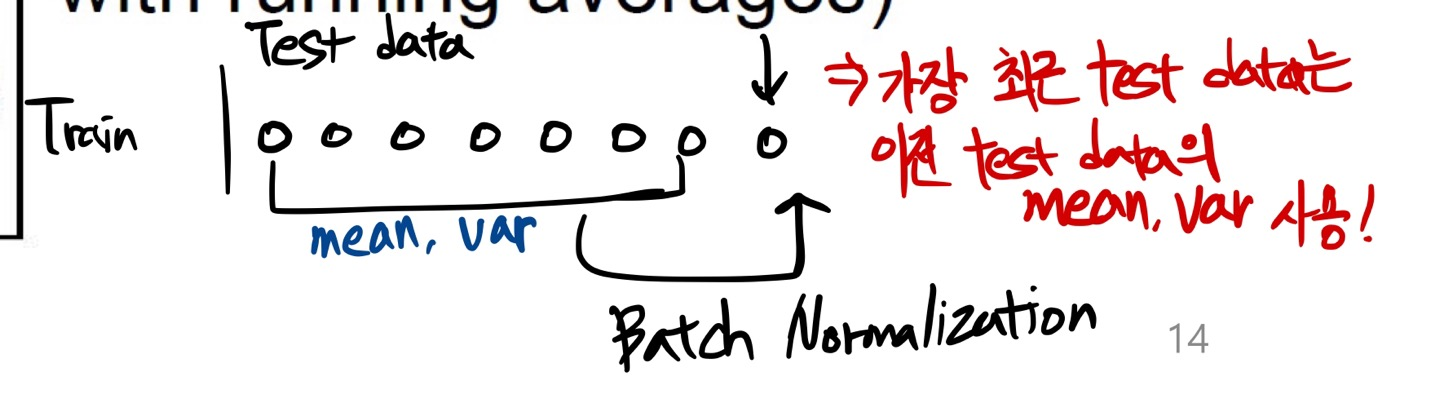
Test data에 BatchNorm 적용
- Train data의 BatchNorm을 적용시키는 게 아니라 이전 test data들의 BatchNorm적용
Optimization methods
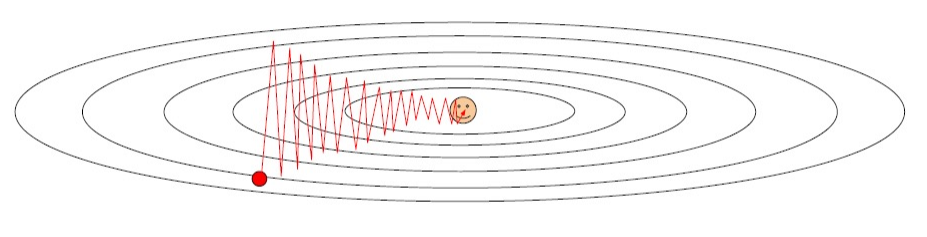
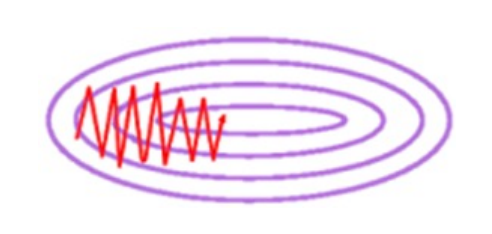
SGD (vanilla optimization method)의 문제점:
gradient의 x축과 y축이 불균형하게 update시 연산 속도가 느려지고 발산 가능성 ↑
Momentum Update
- 이전 gradient를 합산하여 새로운 gradient에 적용 (이전 gradient 정보 반영)
vanilla gradient descent update
| X -= learning_rate * dx |
Momentum update
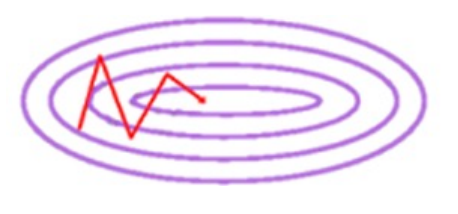
| v = mu * v - learning_rate * dx x += v |
Adagrad Update
- 각 gradient의 값의 크기를 균등하게 조정
| cache += dx ** 2 x -= learning_rate * dx / (np.sqrt(cache) + 1e - 7) |
- cache가 끊임없이 누적되어 후반부에는 weight update가 거의 안 되는 상황 발생
RMSProp Update
- Adagrad의 문제점 해결 → decay_rate
- decay_rate: 최근에 해당하는 weight의 update가 더디다면 이전 cache들을 제거
| cache += decay_rate * cache + (1 - decay_rate) * dx **2 x -= learning_rate * dx / (np.sqrt(cache) + 1e - 7) |
Adam Update
- Momentum + RMSProp
| m = beta1 * m + (1 - beta1) * dx # Momentum → 과거 gradient 반영 v = beta2 * v + (1 - beta2) * (dx **2) # RMSProp → dimension값들의 average 축적 x -= learning_rate *m / (np.sqrt(v) + 1e - 7) |
Learning Rate
- SGD, SGD + Momentum, Adagrad, RMSProp, Adam은 모두 learning rate를 hyperparameter로 가짐
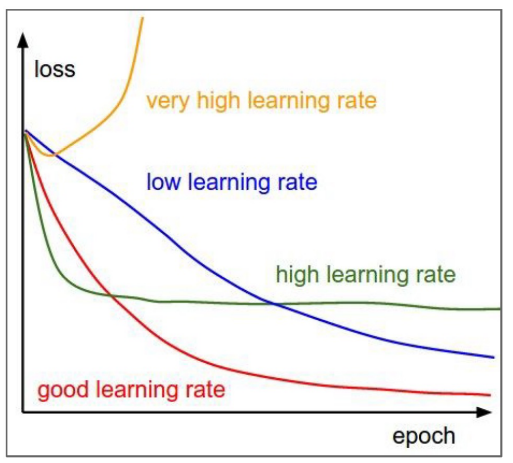
tips) Learning rate 조절할 때, 0.1 → 1 → 10 이런 식으로 과감하게 등비수열 형태로 try 하는 게 좋다!
Ensemble and regularization
Model Ensembles
1. 여러 independent한 model로 train
2. model들의 결과의 평균으로 test data에 적용
→ 보통 2%의 performance가 올라감
Add term to loss
- 최상위의 accuracy를 포기하더라도 overfitting 방지
- "이전 정보들을 모두 신뢰하여 예측하지 않겠다"

L2 regularization

L1 regularization

Elastic net (L1 + L2)

# 사실 현대 Deep Learning에서는 Adam 등의 등장으로 인해 잘 쓰이지는 않는다 ..
Dropout

- 총 node 중 random하게 pick하여 학습
- dropping probability는 보통 0.5를 사용
P = 0.5

def train_step(X):
	# X contains the data

    # forward pass (3 layer neural network)
    H1 = np.maximum(0, np.dot(w1, X) + b1)
    U1 = np.random.rand(*H1.shape) < p			# first dropout mask
    H1 *= U1						# drop!

	H2 = np.maximum(0, np.dot(w2, H1) + b2)
    U2 = np.random.rand(*H2.shape) < p			# Second dropout mask
    H2 *= U2						# drop!

    out = np.dot(w3, H2) + b3
cf) Dropout이 학습 data의 성능을 높이는 건 아님. Test data에서의 성능을 높이는 것이다!
dropout idea
ex) 사람 label 예측 class
tarin data의 feature에 ear가 있는데, Test data에는 ear가 없다면?
→ dropout을 적용하면 ear node가 없을 때도 train되어 ear가 없는 test data도 잘 평가 가능!
Test data에 적용할 때는 모든 node 사용 # Dropout off
def predict(X):
	# ensembled forward pass
    H1 = np.maximum(0, np.dot(w1, X) + b1) * p		# scale the activations
    H2 = np.maximum(0, np.dot(w2, H1) + b2) * p		# scale the activations

    out = np.dout(w3, H2) + b3
→ train시, output 출력을 낮춰서(p) dropout 했으므로 test에 적용할 때도 scale 적용
Data Augmentation
- Data 확충
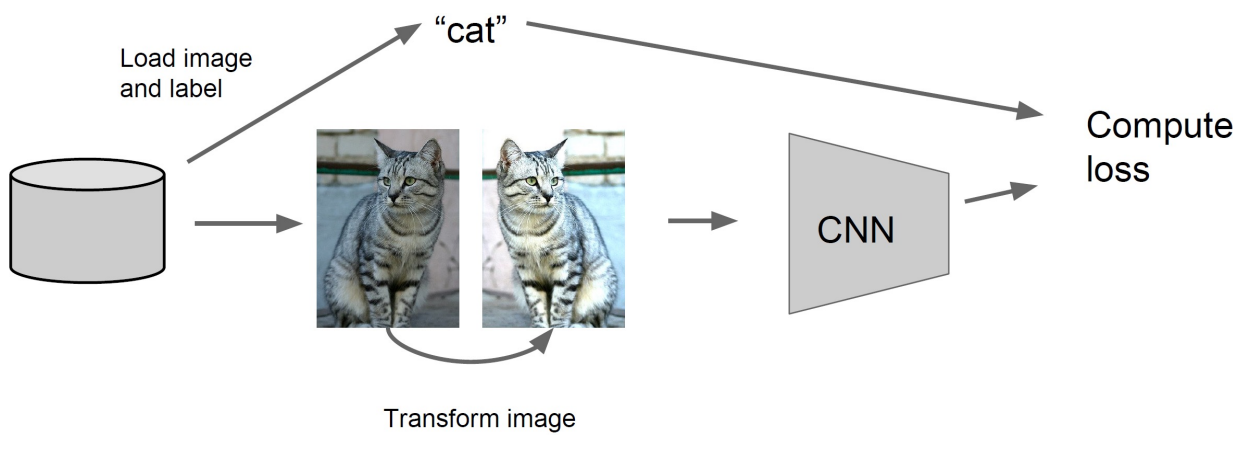
- Horizontal Flips
- Random crops and scales
ResNet:
1. Pick random L in range [256, 480]
2. Resize training image, short side = L
3. Sample random 224 x 224 patch
- Random mix/combinations of:
- translation
- rotation
- stretching
- shearing
- lens distortions
- ..
'Deep Learning' 카테고리의 다른 글
| Recurrent Neural Networks (0) | 2022.06.08 |
|---|---|
| CNN Architectures (0) | 2022.06.07 |
| Convolutional Neural Network (0) | 2022.06.03 |
| Neural Network (0) | 2022.05.30 |
| 모위딥 시즌 2 정리(수기) (0) | 2022.04.07 |


