<Recurrent Neural Networks>
1. Recurrent Neural Networks
2. LSTM & GRU
Recurrent Nueral Networks
Vanilla RNN
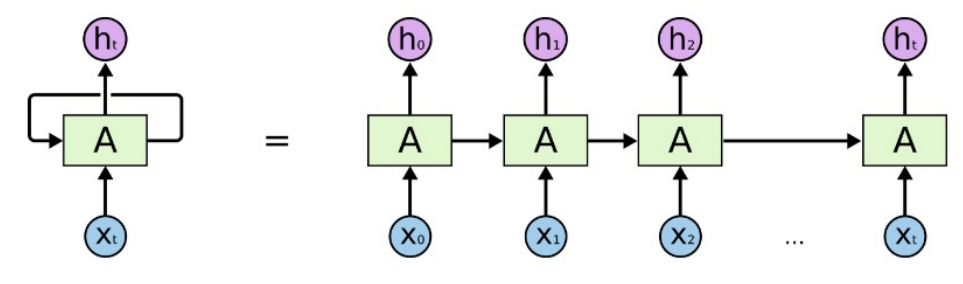
→ 연속적인 data 정보를 가지는 시계열 data 등 에 적합한 model
기본 Neural Networks 구조
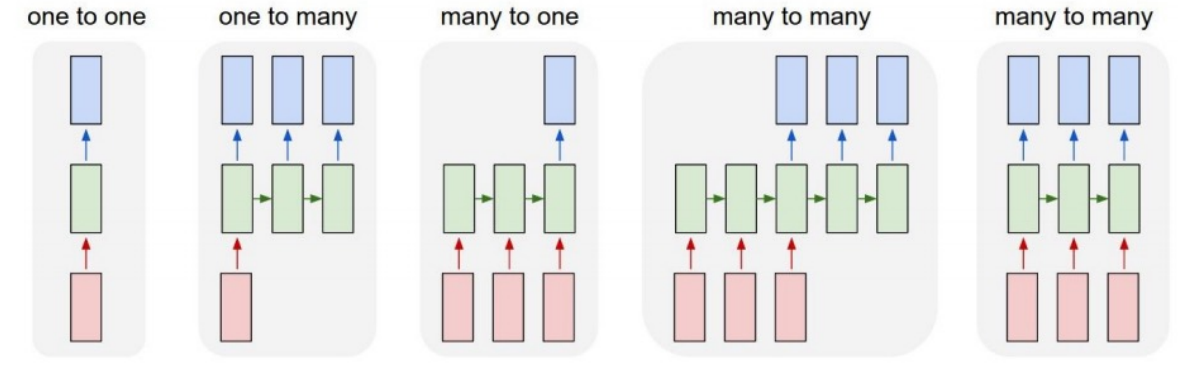
one-to-one
vanilla neural networks
one-to-many
e.g. Image Captioning (image → sequence of words)
many-to-one
e.g. Sentiment Classification (sequence of words → sentiment)
many-to-many
e.g. Machine Translation (seq of words → seq of words)
many-to-many´
e.g. Video classification on frame level (input 입력 후, 실시간으로 output 출력)
RNN의 탄생 배경

RNN의 hidden state 계산
- h(t) = f(w)(h(t-1), x(t))
- h(t) = new state
- f(W) = some function with parameters W
- h(t-1) = old state
- x(t) = input vector at some time step
→ 모든 step에서 same function, set of parameter 사용
RNN의 output 계산
- h(t) = tanh(W(hh)h(t-1) + W(xh)x(t)) → 이전 hidden state + 현재 step에서 input vector
- y(t) = W(hy)h(t)
<RNN으로 'hello'를 train하는 과정>
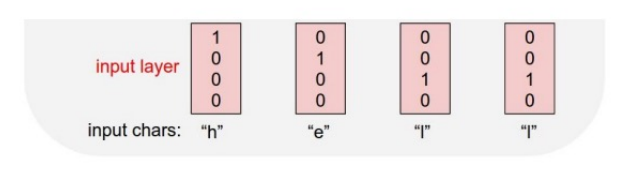
· training sequence: 'hello'
· Vocabulary: [h, e, l, o]
# Vocabulary = 중복을 제거한 text의 총 단어 set
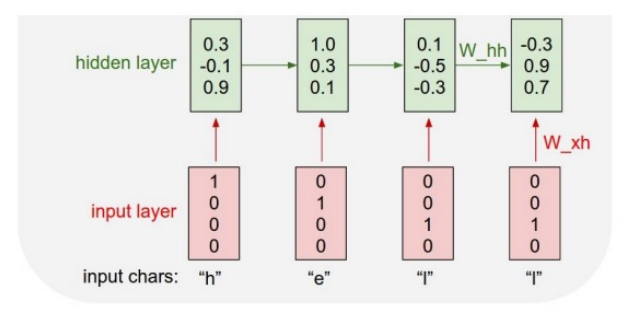
· h(t) = tanh(W(hh)h(t-1) + W(xh)x(t))
→ RNN에서는 zero-centered가 중요하기 때문에 tanh activation function 사용 (mean = 0)
· 이전 hidden state와 현재 input vector의 합으로 현재 hidden layer로 추출

· output layer에 softmax를 적용하여 값 추출
→ Backpropagation을 거쳐 weight update
→ 모든 step에서 same function, parameter를 사용하기 때문에 종합적으로 train
Vanishing/Exploding gradient of RNN
language model이나 question answering word의 다음 step 예측에 영향을 주는 word가 예측 word로 부터 멀어질수록 gradient update 시, h(t) = tanh(ax(t+1) + bh(t) + c)의 hidden state 계산에서 계수 b가 계속되는 거듭제곱으로 gradient vanishing/exploding이 크게 발생.
→ Long Sequence 처리를 위한 LSTM model 개발
LSTM & GRU
Long-Short Term model [Hochreiter et al., 1997]
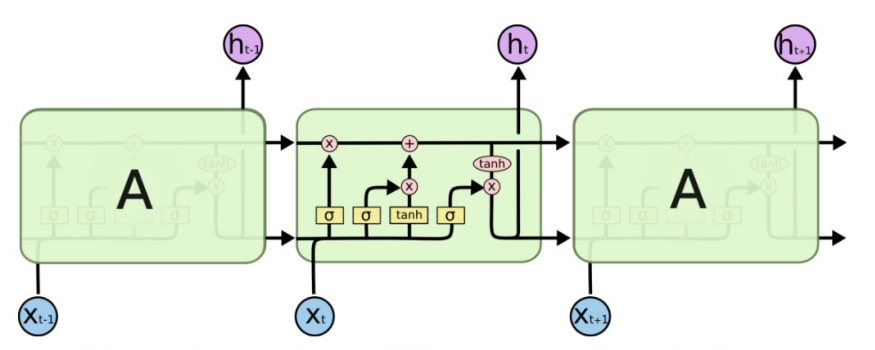
- f: Forget gate
- i: Input gate
- g: Gate gate
- o: Output gate
Cell state: Long-term 정보 담당→ Long-term dependency 해결
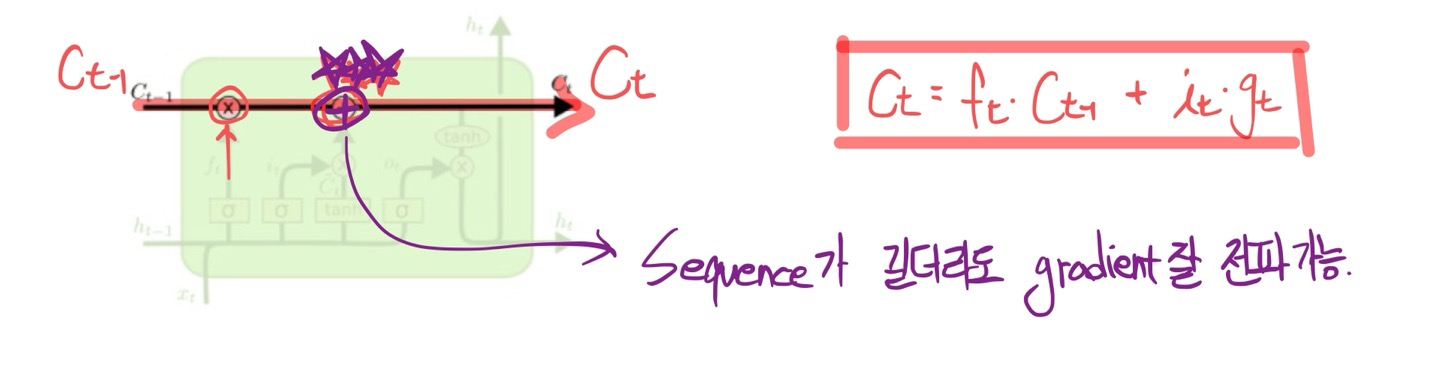
- 정보가 아무 변화없이 쭉 흐를 수 있는 구조
- Cell state의 + 연산으로 RNN의 gradient vanishing/exploding 극복
- C(t) = f·C(t-1) + i·g
Hidden state: Short-term 정보 담당
- h(t) = o·tanh(C(t))
Forget gate: 이전 정보 중 얼마나 버릴 것인가?
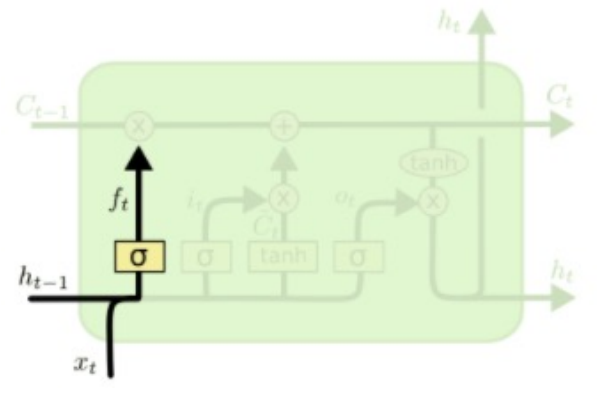
- f(t) = σ(W(f)·[h(t-1), x(t)] + b(f))
Input gate & Gate gate: 새로운 정보 중 어떤 것을 Cell state에 저장할 것인가?

- i(t) = σ(W(i)·[h(t-1), x(t)] + b(i))
- C(t) = tanh(W(C)·[h(t-1), x(t)] + b(C))
Cell state: forget gate로 선별한 과거 date + Input gate로 선별한 현재 정보로 현재 cell state 생성
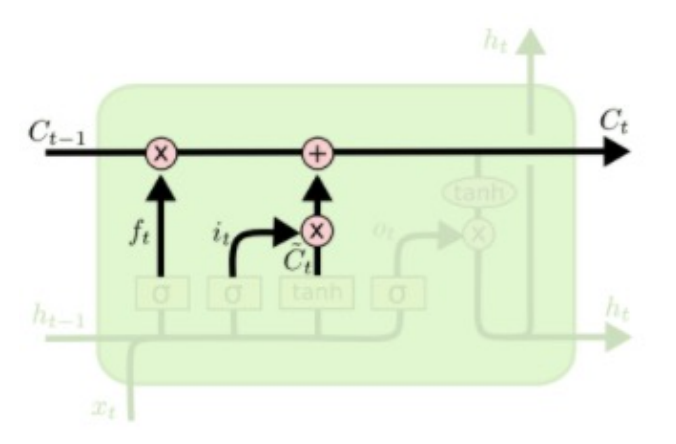
- C(t) = f(t)*C(t-1) + i(t)*C´(t)
Output gate: tanh에 통과된 현재의 cell state를 output gate에 통과
→ 현재의 hidden state 생성, 다음 time step으로 전달
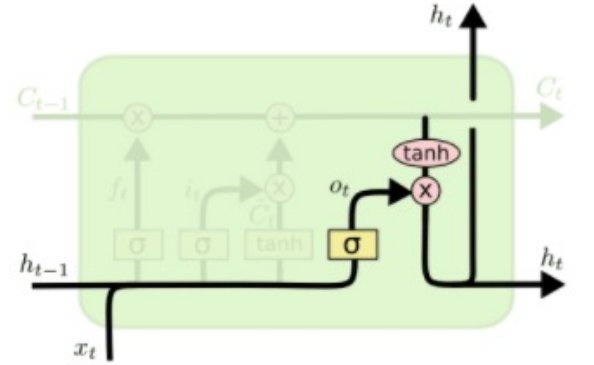
- o(t) = σ(W(o)[h(t-1), x(t)] + b(o))
- h(t) = o(t) * tanh(C(t))
Gated Recurrent Unit
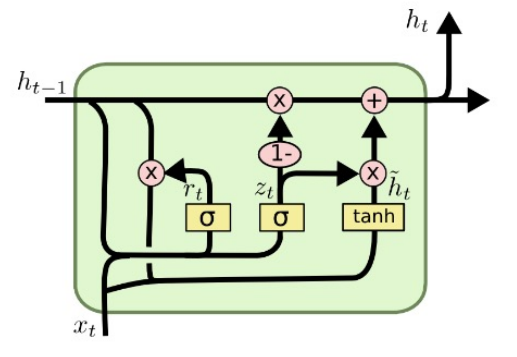
- LSTM 경량화: LSTM의 4 gate vector → 3 gate vector
- forget gate와 Input gate 결합
- Cell state와 Hidden state 결합
- LSTM보다 월등히 향상된 속도와 성능도 비슷한 model
- z(t) = σ(W(z)·[h(t-1), x(t)]): Update gate - 이전 시점의 정보가 다음 시점에서 얼마나 유지될 지 결정
- r(t) = σ(W(r)·[h(t-1), x(t)]): Reset gate - 지난 정보를 얼마나 버릴 지 결정
- h´(t) = tanh(W·[r(t) * h(t-1), x(t)]) → Output gate 역할
- h(t) = (1 - z(t)) * h(t-1) + z(t) * h´(t) → Cell state + Hidden state
(1 - z(t)) → LSTM의 forget gate
z(t) → LSTM의 Input gate
→ 둘의 합이 1이 되도록 modeling
'Deep Learning' 카테고리의 다른 글
| Attention Models (0) | 2022.06.12 |
|---|---|
| Convolution 연산 시, channel 수 / filter 수와 parameter 수 관계 정리 (0) | 2022.06.09 |
| CNN Architectures (0) | 2022.06.07 |
| Convolutional Neural Network (0) | 2022.06.03 |
| Training Neural Networks (0) | 2022.06.02 |


