*사용된 모든 영문 image의 출처는 cs231n 강의 자료입니다.*
<Self-Supervised Learning>
1. Self-Supervised Introduction
2. Pre-text tasks
3. Constrastive Learning
Self-Supervised Introduction
Pre-training
- Pre-trained된 network의 feature들은 다양한 downstream task에서 사용됨 → supervision의 발달에 많은 영향
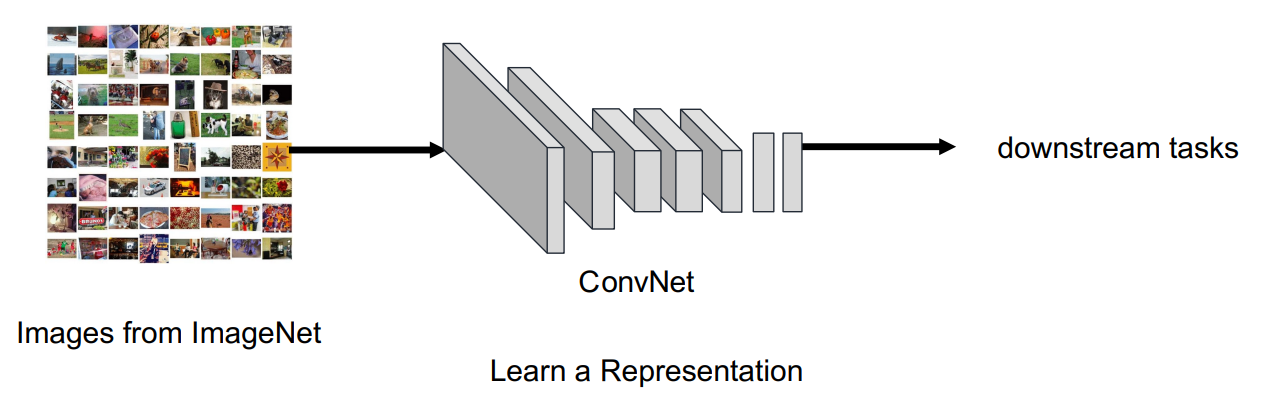
- Pre-train on large superised dataset
- Collect a dataset of "supervised" images
- Train a Convolutional Network
Getting "real" labels is difficult and expensive.
→ Using the data itself: Self-Supervised
Self-Supervised Learning
- Unsupervised Learning의 범주 내 존재
- Semi-automatic process를 사용함으로써 data로부터 label 획득
(Input data의 한 부분이 다른 부분의 supervision 역할 수행)
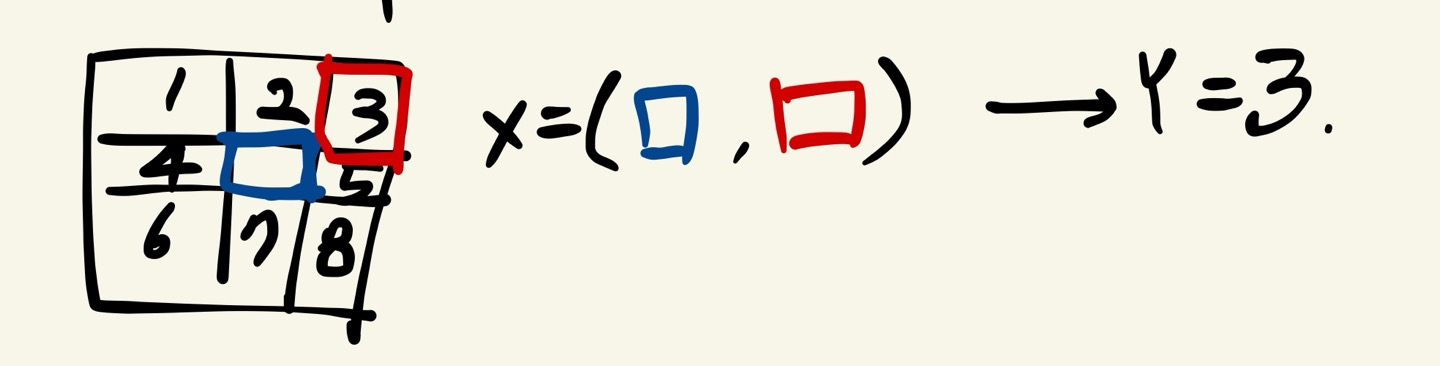
- Train network with predicting the "semi-automatically" obtained labels

Pre-text tasks
pre-text tasks: user가 새로운 문제(pre-text task) 정의
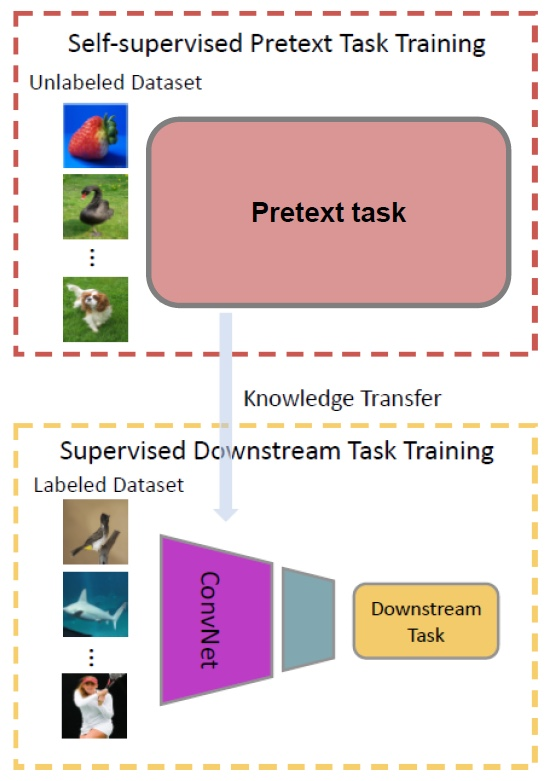
→ data 자체에 대한 이해도 ↑, transfer learning으로 다양한 downstream task 해결
Simple Self-Supervised Models in Computer vision
- CE: Fill in the blanks
- RotNet: Predicting the rotation
- JigSAW: Solving the Jigsaw-puzzle
Evaluation Protocol
- Fine-tuning을 통한 Trainsfer learning으로 pre-trained된 representation evaluate
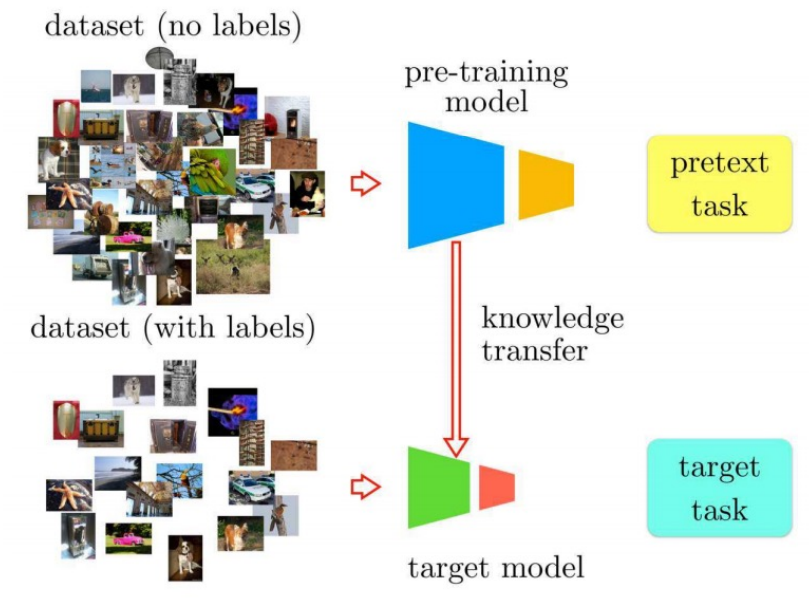
Classification (ImageNet-10K)
- Freeze a pre-trained model
- Train a linear layer for down-stream tasks
Detection, Segmentation (PASCAL VOC)
- Initialize with pre-trained model
- Fine-tune the pre-trained model with an additional task-specific model
Missing in Pre-text task
- pre-text tasks가 정말로 representation quality를 올렸는지 unclear하다 ..
→ Invariant mapping, Semantic Similarity 기법 사용
- data 개수 만큼 class 개수를 생성하여 연산량이 많고 성능 향상이 더디다 ..
Why? 각 image마다 train이 진행되므로 data 개수 = class 개수가 된다.
What do we want from the learned representation
- Invariant mapping: representations should be stable for an slightly transformed version of an image
- Semantic Similarity: semantically related images should be close to each other
Constrastive Learning
- Supervised Learning의 classification 결과, 비슷한 image일 때 높은 확률값 도출
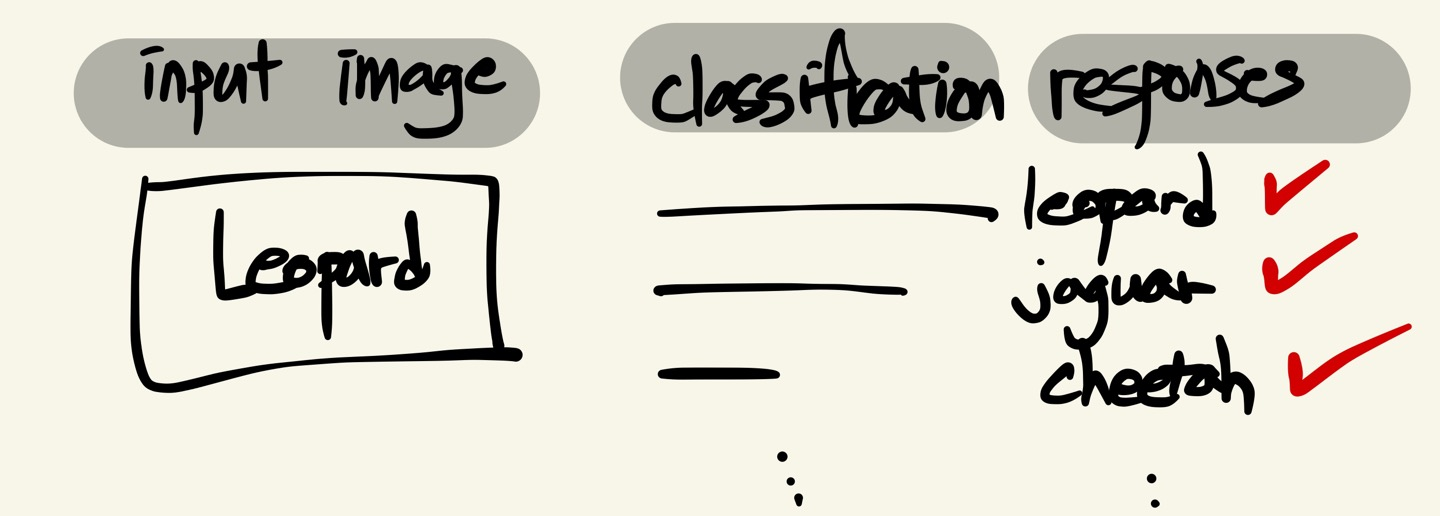
- model이 따로 instance간 유사성을 train 안 해줘도 잘 추출된 특징값은 instance간 유사도 정보 발생
Constrastive Learning
- Self-Supervised의 recent research trend
- Positive pair (related image)와 Negative pair (unrelated image)로 구성
- Positive pair: 같은 image에 서로 다른 augmentation 후, 두 positive pair간의 거리 좁혀지게 train
- Negative pair: 다른 image에 서로 다른 augmentation 후, 두 negative pair간의 거리가 멀어지게 train
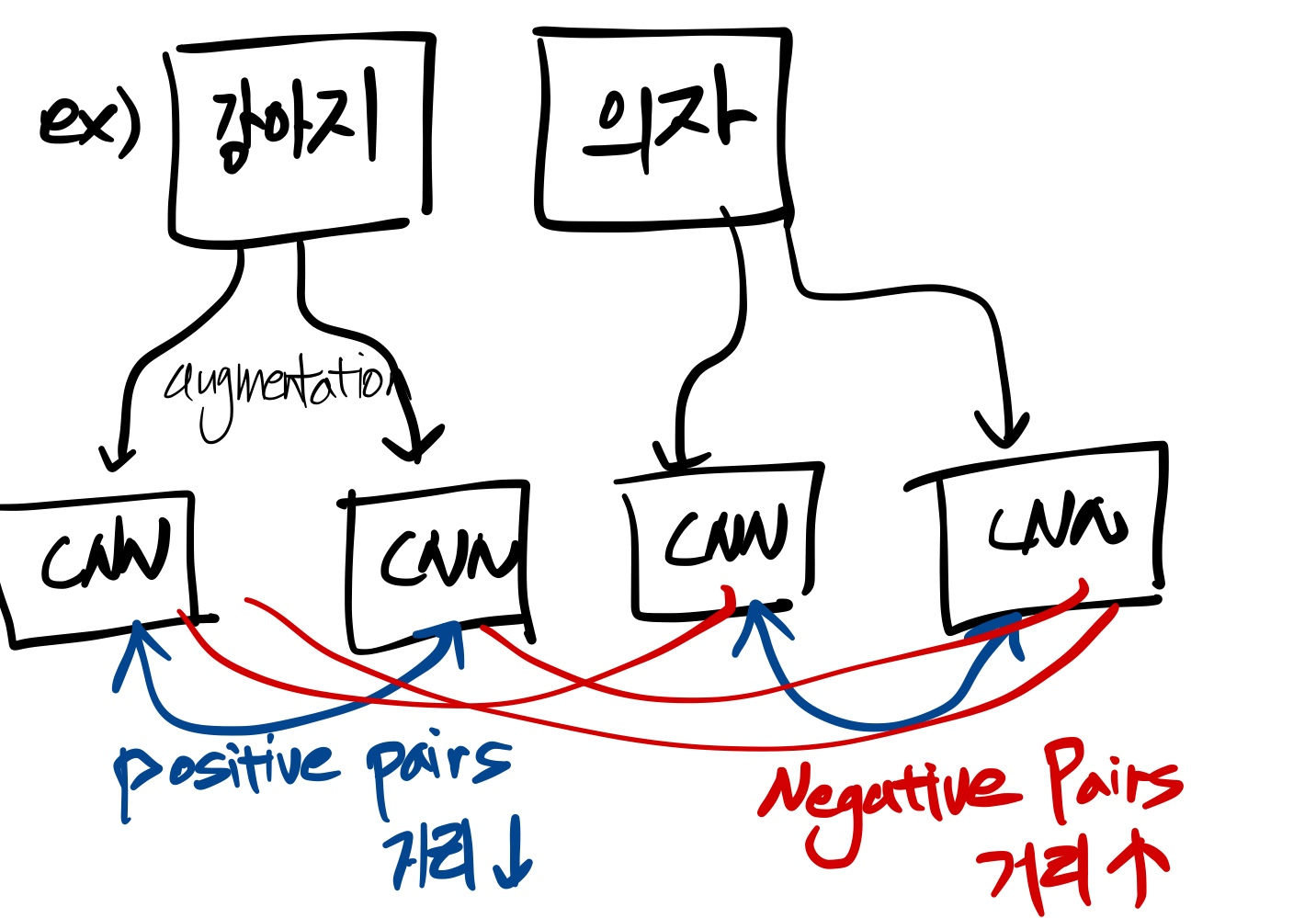
Constrastive Learning Loss Function
- Related image의 embedding은 unrelated image의 embedding보다 가까워야 한다.

Data augmentation for Constrastive Learning
- Positive (related)

- Negative (unrelated)
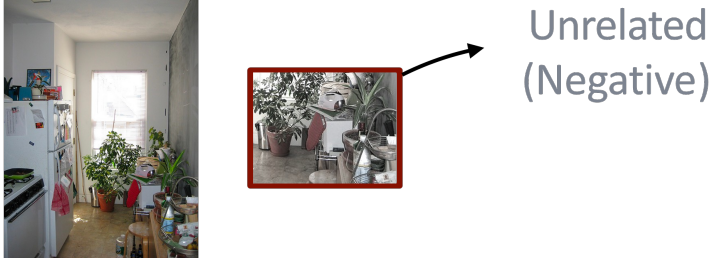
→ Data augmentation으로 related image 생성
Framework of Constrastive Learning
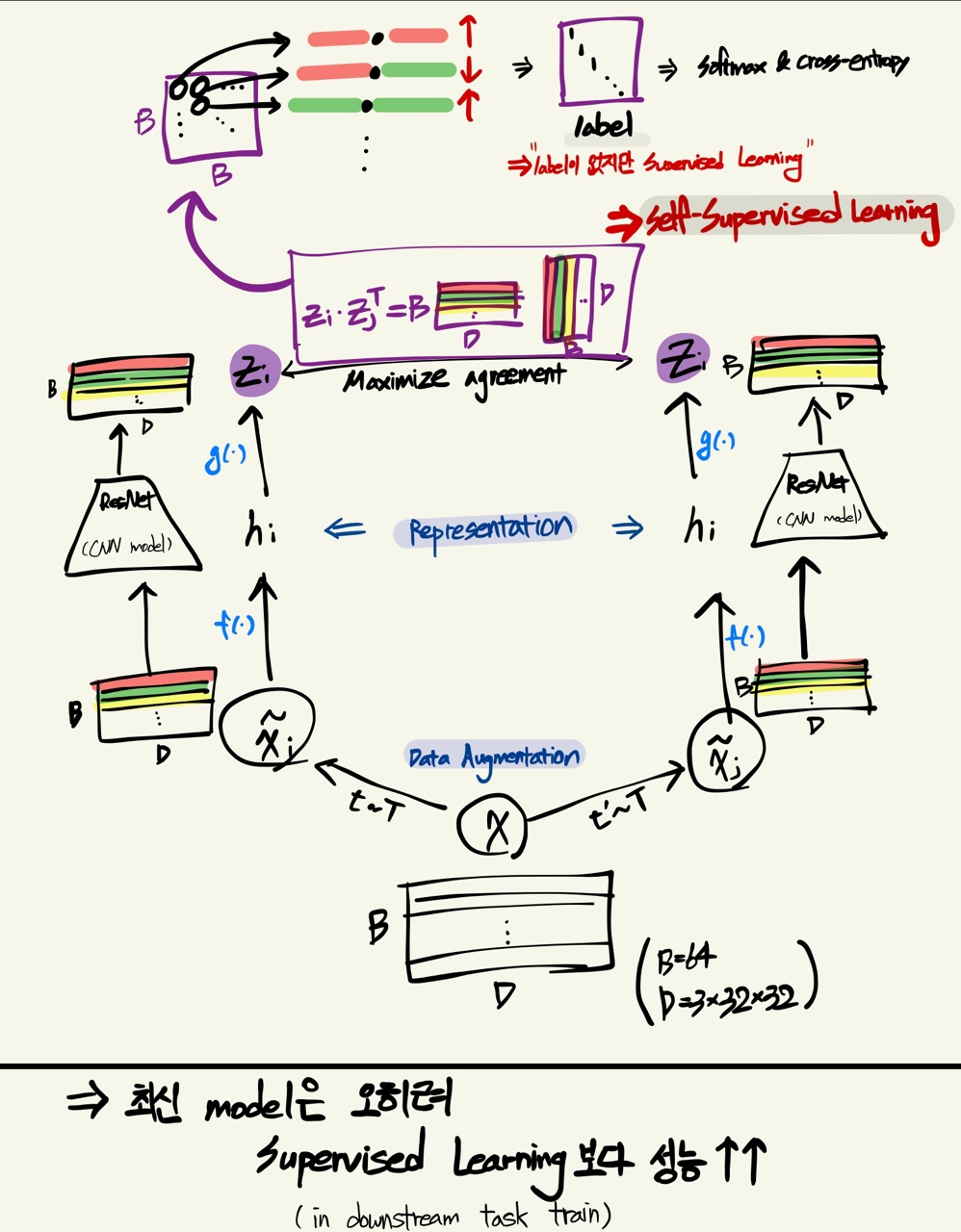
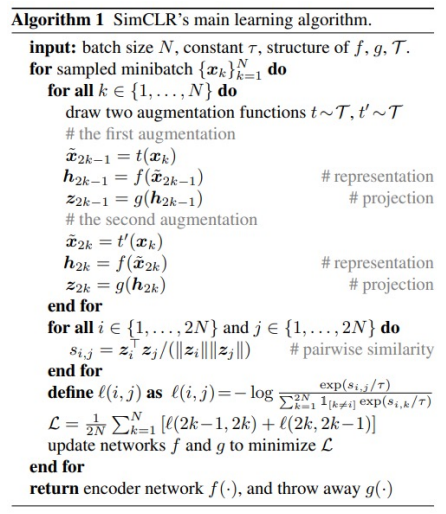
→ Self-Supervised Learning은 label이 없지만 Supervised Learning Train을 하는 algorithm을 가진다.
cf) 최신 Self-Supervised Learning은 Supervised Learning보다 더 뛰어난 성능을 보인다..!
(Supervised learning network의 Negative성을 가지지 않는다.)
Problems of Constrastive Learning
- Moving target으로 인한 unstable training
→ f(x)를 f(y)에 가깝게 이동시키면, f(y)는 다른 location으로 이동
(f(x)와 f(y)가 indentical network 공유)
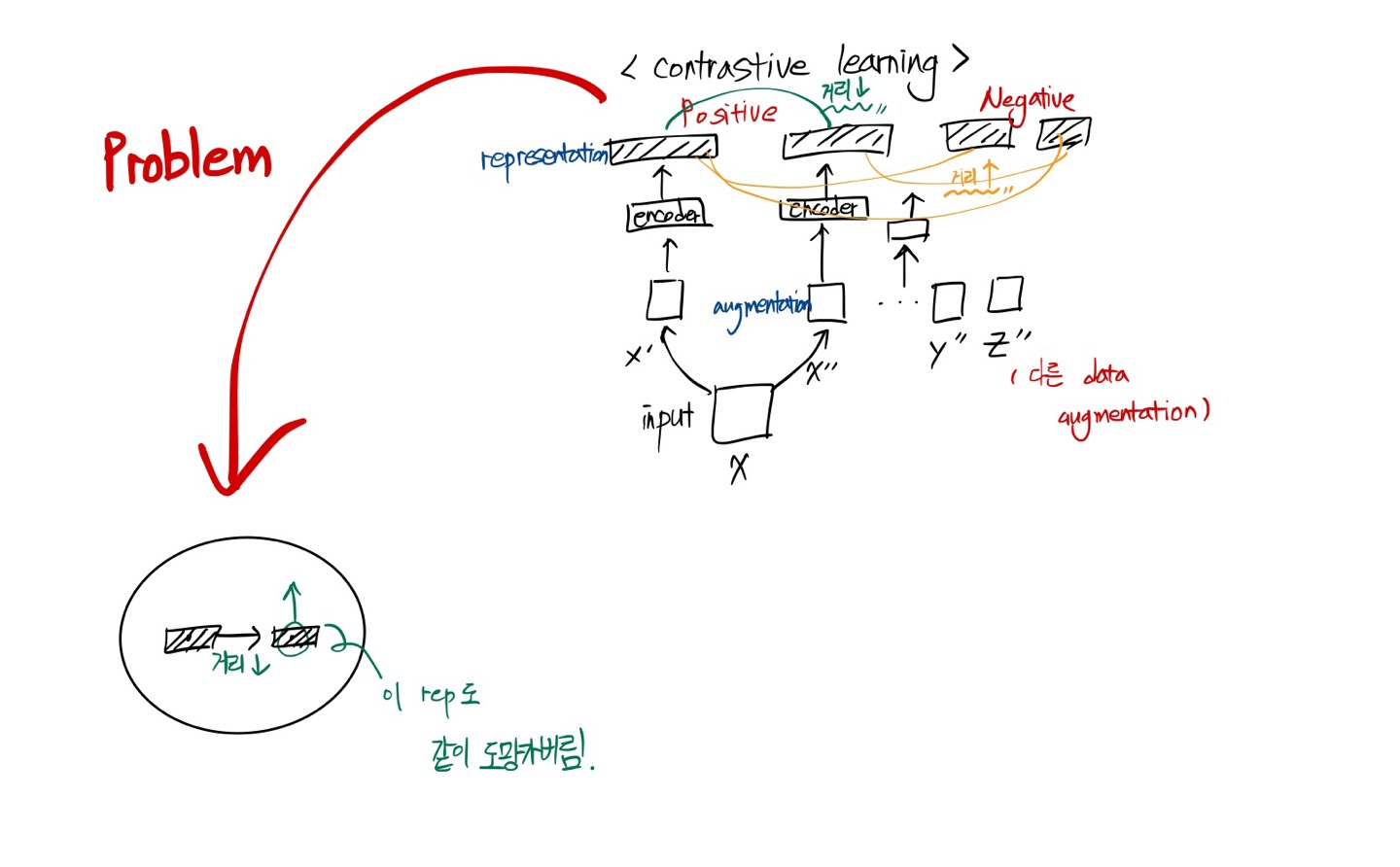
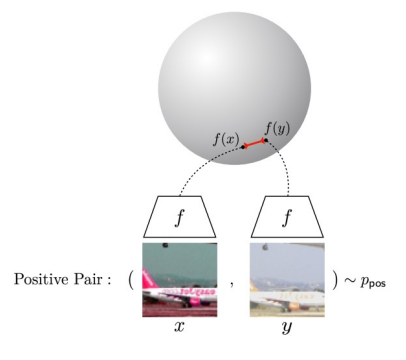
Solutions !!
- A lot of Negtive samples: representation 이동을 제한하고 trivial solution을 피하기 위해 Negative sample 수 증가
- SimCLR

→ Huge batch size 사용
- PIRL

→ Memory-bank에 negative sample의 feature 저장
- Fixed된 target network 사용
- MoCo
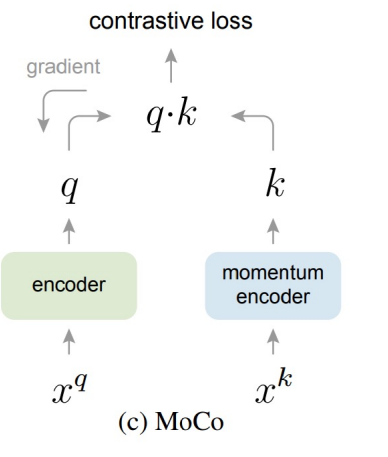
→ Momentum encoder를 사용하여 Negative sample fix

- MoCo v2
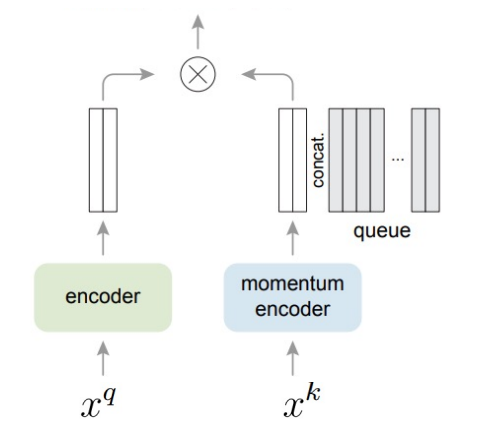
→ Momentum Eocoder + Memory Bank 사용
→ Reinforcement Learning에서 흔히 사용되는 기법
Ingredients for successful training
- Data Augmentations
- Number of negative samples
- Non-linear projection layer
'Deep Learning' 카테고리의 다른 글
| Pytorch Label Smoothing (0) | 2022.08.01 |
|---|---|
| GAN generator Loss function (0) | 2022.06.15 |
| Generative Adversarial Networks (0) | 2022.06.13 |
| Attention Models (0) | 2022.06.12 |
| Convolution 연산 시, channel 수 / filter 수와 parameter 수 관계 정리 (0) | 2022.06.09 |


